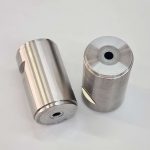

Technical reference image. The quote takes into account your exact standard, size and drawing.
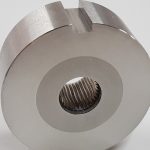
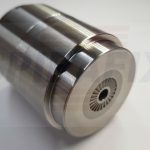
The serrated die imprints the crown of teeth (serration) on the underside of the flanged head, typical of serrated flange screws and nuts (DIN 6921 serrated type). These teeth slightly penetrate the clamping surface and act as a mechanical lock against loosening from vibration — a solution widely used in auto parts, white goods and metal structures where an additional lock washer is not wanted.
The serration pattern (number of teeth, angle and direction) is cut by electrical discharge machining on the carbide insert, respecting the geometry that ensures the anti-vibration effect without excessively damaging the mounted part. KS manufactures to drawing/sample and replaces the tooling keeping the same tooth profile.